

Nearshore & Offshore
Nearshore & Offshore
Foundation and Structural Design Services
Design of Offshore Wind Turbine Foundations
- Conduct extensive research and numerical studies to optimize foundation technology for both deep and shallow waters.
- Utilize state-of-the-art Finite Element Analysis (FEA), Computational Fluid Dynamics (CFD), and aerodynamic modeling for structural understanding.
- Focus on creating robust, safe, and highly optimized designs.
- Ensure reliable and efficient design execution for complex offshore projects
NeXHS specialization - Design of offshore wind turbine foundations
- Participated in large-scale offshore wind farm (OWF) projects, including Vietnam's first demonstration project.
- Utilize state-of-the-art Finite Element Analysis (FEA), Computational Fluid Dynamics (CFD), & aerodynamic modeling for better structural understanding.
- Conducted extensive research and numerical studies to optimize foundation technology for deep and shallow waters.
Our Approach to Offshore Wind Design
- NeXHS has extensive experience in designing offshore wind turbine foundations, contributing to major offshore wind farm projects, including Vietnam's first demonstration project.
- We Conduct extensive research and numerical studies to optimize foundation technology for deep and shallow waters.
- We Utilize state-of-the-art Finite Element Analysis (FEA), Computational Fluid Dynamics (CFD), and aerodynamic modeling for better structural understanding.
- We Focus on making designs that are robust, safe, and highly optimized.
Offshore projects involve complex technical and project management challenges. NeXHS ensures reliable and efficient design execution processes
Structural Design Services
- Design of offshore structures including jacket structures for substations
- Monopile design for wind turbine foundations
- Design for cranes and lifting tools
- Design changes and modifications for port cranes
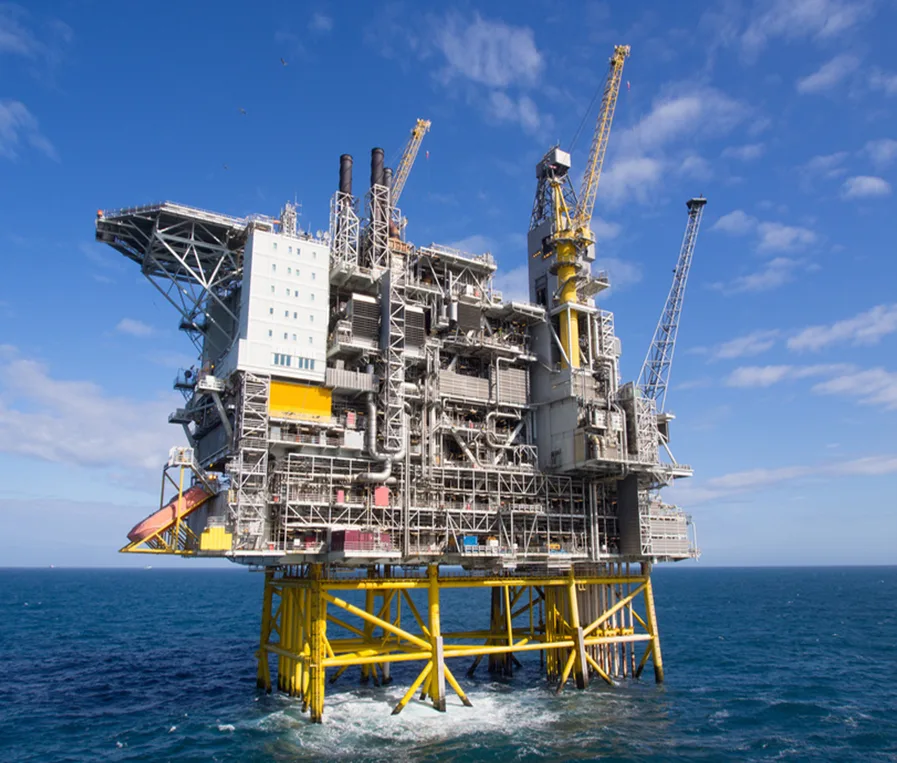
Design of offshore structures including jacket structures for substations.
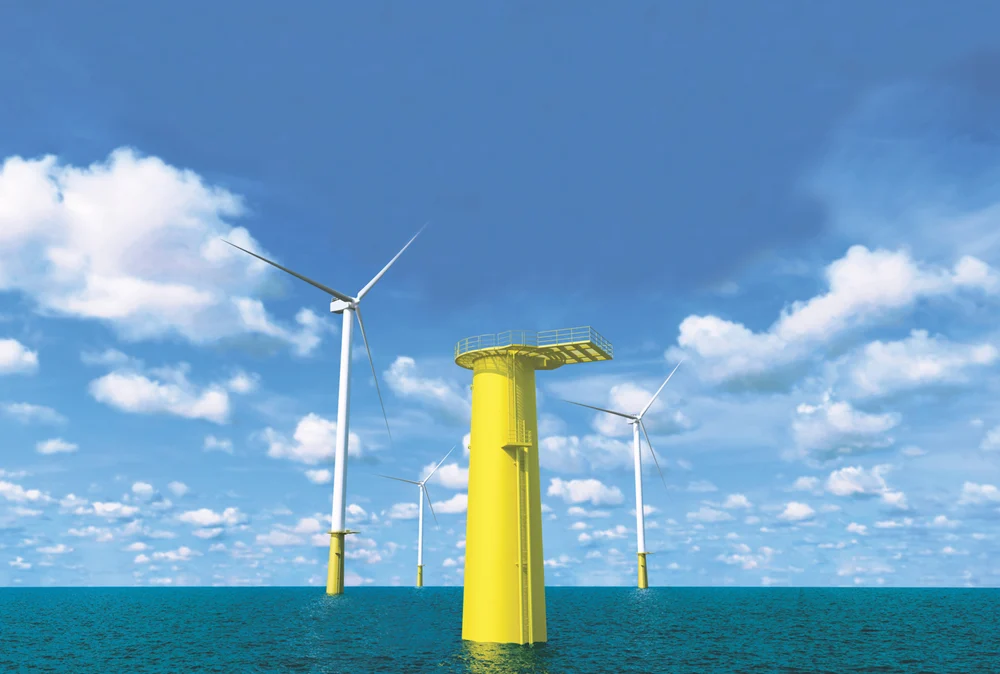
Monopile design for wind turbine foundations
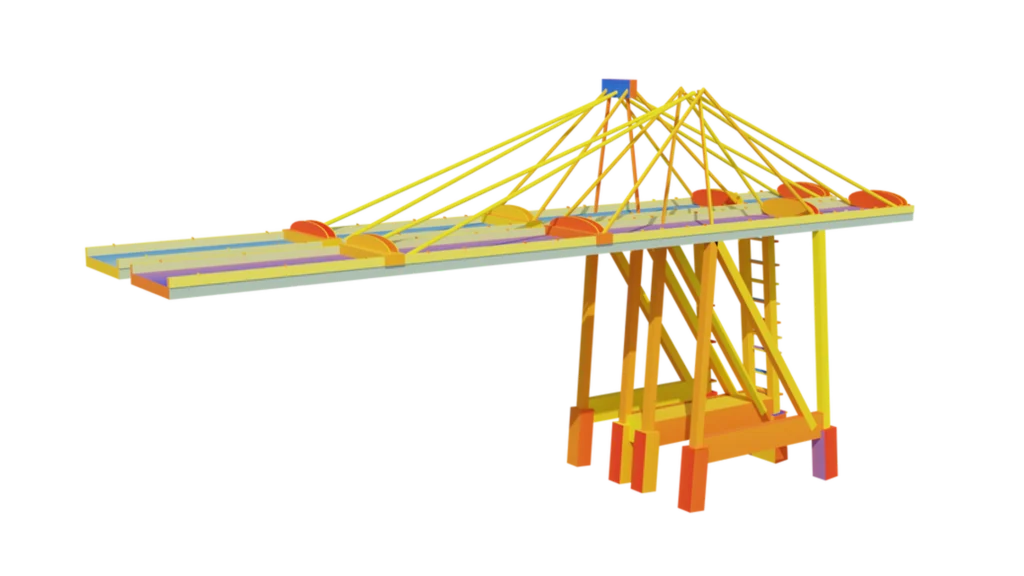
Design for cranes and lifting tools
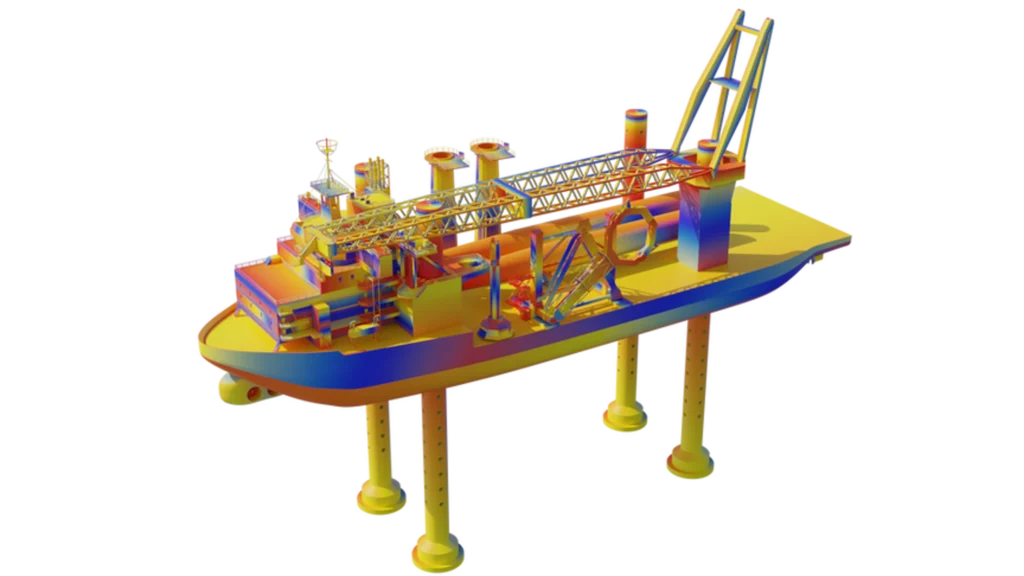
Design changes and modifications for port cranes
Nexhs Offshore Specialization services
- Wave Hydrodynamics
- Design of Offshore Structures
- Reliability of Offshore Structures
- Foundation of Offshore Structures
- Instrumentation of Offshore Structures
- Subsea Pipelines and Risers
- Analysis of Offshore Structures
- Dynamics of Offshore structures
- Dynamics of Marine Vehicles
- Numerical Modelling of Offshore Structures
- Installation of Offshore Structures
- FEA coupled with CFD and Aerodynamics
Wave Hydrodynamics
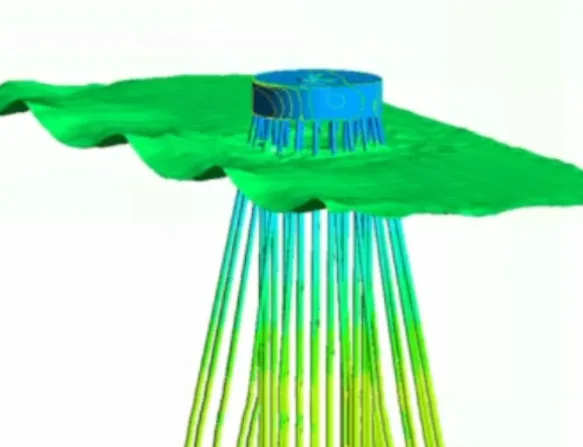
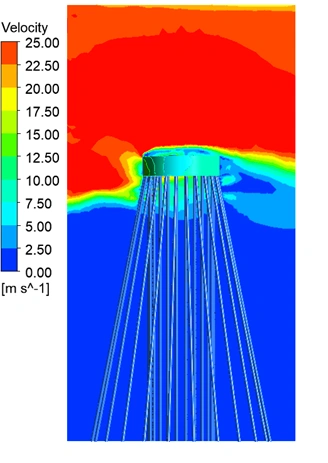
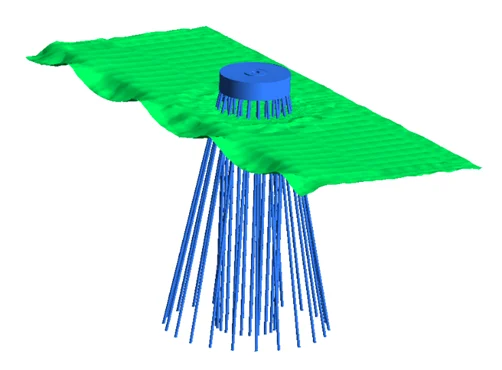
- Wave Load Analysis: Assess wave forces on turbine structures, including horizontal and vertical components.
- Hydrodynamic Loading Evaluation: Analyze wave-induced loading to enhance material selection and structural resilience.
- Wave-Structure Interaction Modeling: Simulate interactions with foundations to predict motion and stress patterns.
- Advanced Hydrodynamic Simulations: Use computational models to study wave effects like diffraction and reflection.
- Stability and Resonance Solutions: Prevent resonance and minimize vibrational impacts on structural stability.
- Environmental Assessment: Tailored analysis of local water depth, seabed, and seasonal wave conditions.
- Foundation Design Optimization: Recommend foundation types based on wave analysis for enhanced stability.
Analysis of Offshore Structures
- Dynamics and reliability of offshore structures
- Numerical modeling and structural response studies.
- Foundation design and installation assessments.
Offshore Logistics and Support Systems
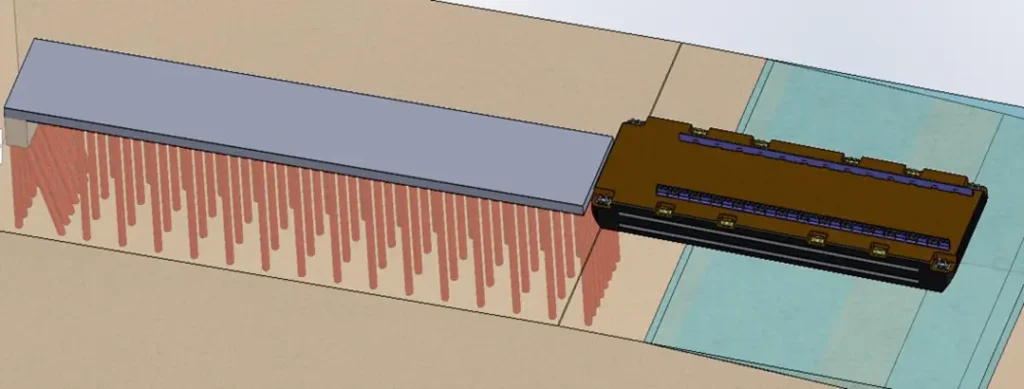
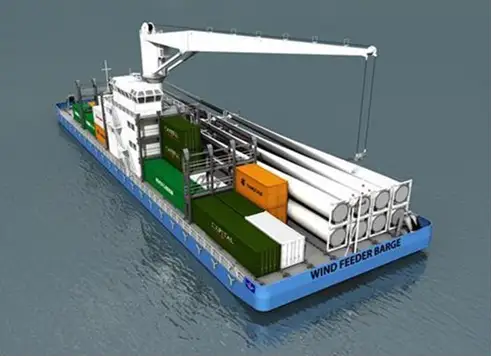
- Design of offshore logistics systems.
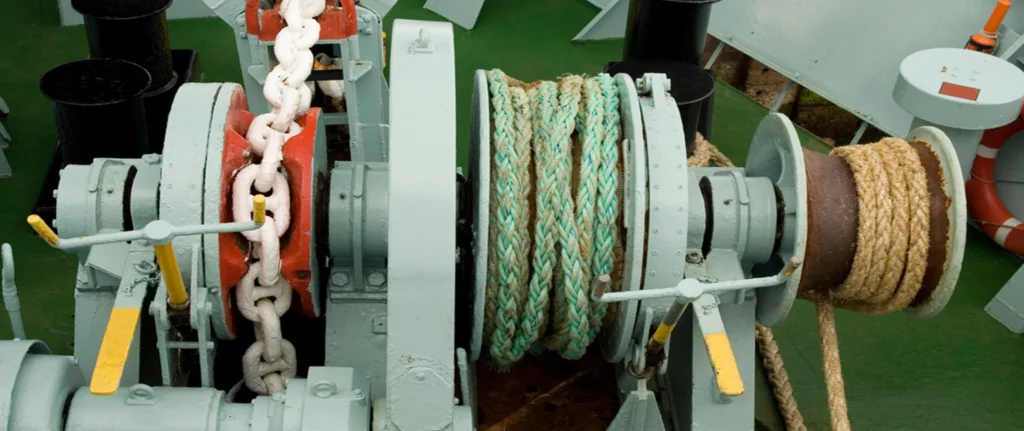
- Tugger winches: Mounted on platforms/vessels for controlled tension, maneuvering, and accurate load positioning.
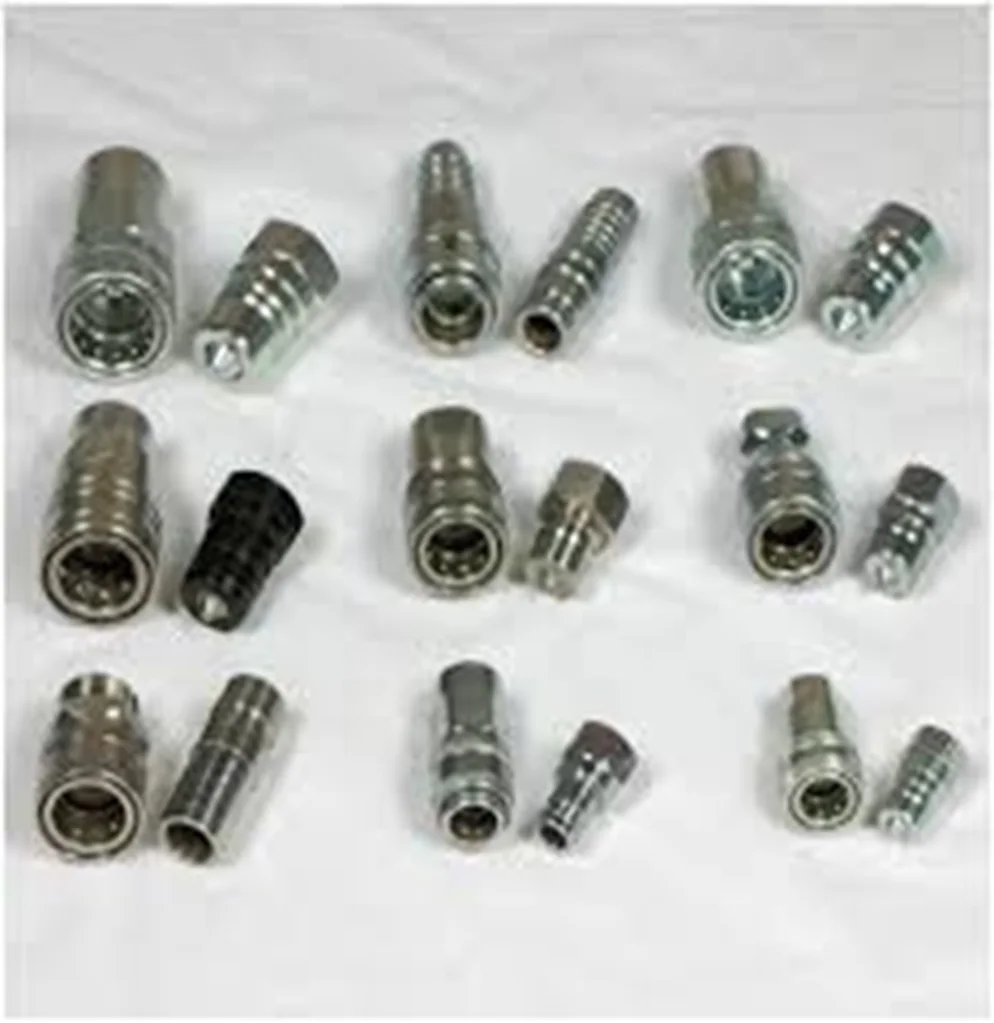
- Quick release connectors for efficient offshore connections.
Design of Offshore Logistics
Tugger Winches
- Mounted on platforms or vessels
- Apply controlled tension
- Assist in maneuvering parts of the wind turbine structure into place
- Essential for safe load positioning
- Enable accurate load positioning
Structural Calculations and Code Checking
- FEA coupled with CFD and Aerodynamics.
- Buckling of beams and plates.
- Non-linear calculations.
- Fatigue analysis and residual lifetime calculations
- Static analysis and static stress check.
- Normal modes frequencies.
- Deflection checks.
- Bolts, rivets, and connection checks.
- Flexible composite structure evaluations
Mooring system designs
Types of Mooring System Designs
- Plain Catenary Mooring System
- Multi-Catenary Mooring System
- Buoyant Semi-Taut Mooring System
- Taut Mooring System
1. Plain Catenary Mooring System
A catenary mooring system uses heavy chains or cables that form a catenary curve (a natural curve that a hanging cable assumes under its own weight) between the floating structure and the seabed.
Features
- No tension in the vertical direction – the system relies on the horizontal holding power of the chain’s weight.
- Common in shallow to moderate water depths (up to 300m).
- Ideal for oil platforms and floating wind turbines in these depths.
Advantages
- Simple and cost-effective.
- High fatigue resistance due to low dynamic tension.
- Easy to install and maintain.
2. Multi-Catenary Mooring System
A multi-catenary system uses multiple catenary lines connected to different anchor points or shared points, enhancing stability by distributing forces more evenly.
Features
- More complex than a single catenary system.
- Useful in high-current or high-wave environments where better distribution of load is necessary.
Advantages
- Better stability and redundancy.
- Enhanced load distribution reduces the risk of failure.
3. Buoyant Semi-Taut Mooring System
This system combines buoyancy modules on the mooring lines with a semi-taut configuration, offering a mix of vertical and horizontal loading characteristics.
Features
- Suitable for deeper waters (300m to 1000m+).
- Buoyancy modules reduce the weight of the mooring line, allowing for longer spans with lower seabed impact.
- Somewhat flexible but with controlled tension.
Advantages
- Reduced seabed footprint compared to catenary.
- Allows deeper water installation without requiring very long chains.
- Handles dynamic motions well.
4. Taut Mooring System
Taut mooring systems use high-tension vertical or steeply inclined lines anchored firmly to the seabed. The lines are usually made of synthetic fiber or wire rope, and there’s minimal sag.
Features
- Best suited for deep-water environments (1000m+).
- Provides strong restoring forces and minimizes platform drift.
- Lines are pre-tensioned.
Advantages
- Requires less horizontal space on the seabed.
- Better station-keeping performance.
- Less susceptible to motion from waves and currents.
Geotechnical studies for offshore structures
- Investigation to assess soil & rock properties beneath the seabed using specialized equipment on dedicated vessels & drilling units.
- Deep penetration survey to gather stratigraphy data up to several hundred meters below the mudline for large structures.
Bathymetric studies for offshore structures
- Comprehensive Bathymetric Mapping
- Advanced Survey Methods
- High-Resolution Data Collection
- In-Depth Environmental Insights
- Supporting Offshore Energy Development
- Applications Across Project Stages