Foundation
Foundation
We have years of Expertise in providing Optimized Designs and Consultation of Onshore WTG Foundations for major OEMs and IPPs in the Global Wind Energy market which have been validated, by major certifying bodies like UL, DN-VGL and our designs are verified by CSIR-SERC.

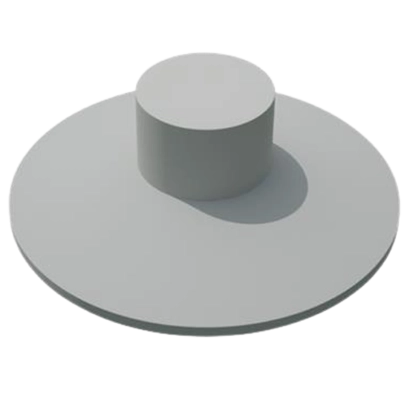
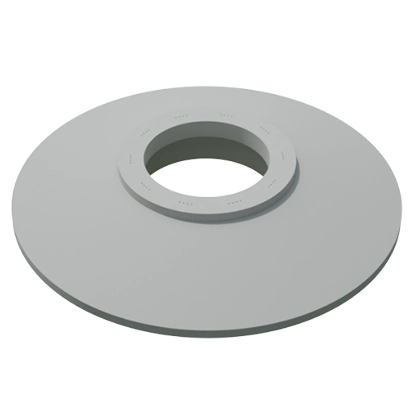
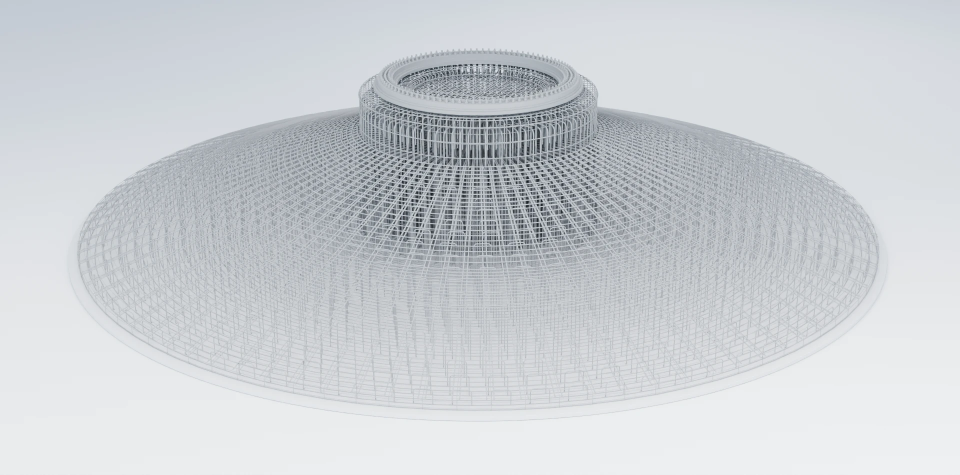
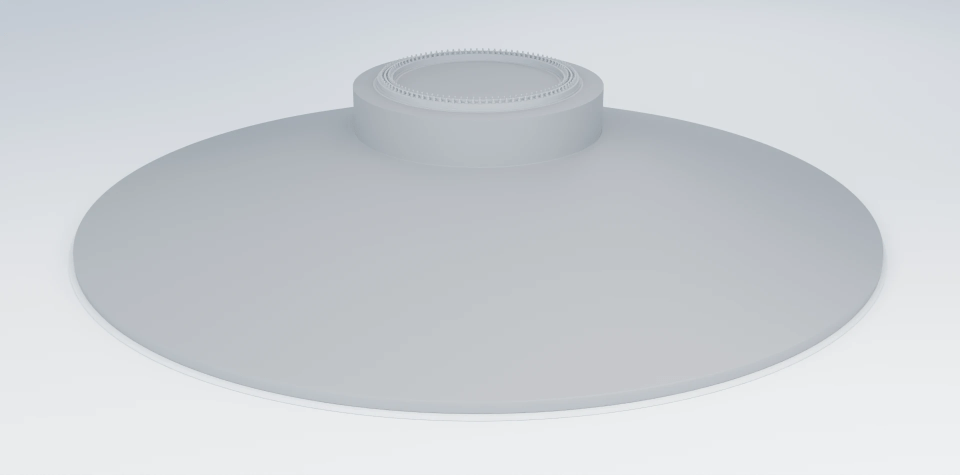
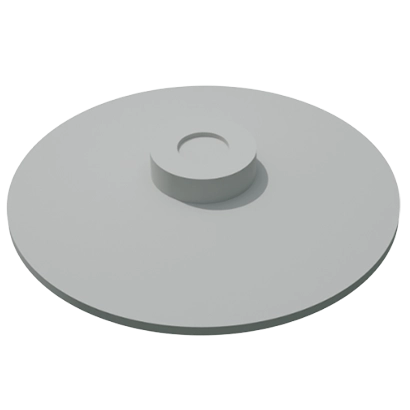
A conventional circular foundation designed for uniform load transfer from the tower base to the subsoil. Its single-stage casting ensures simplicity and speed in construction. Preferred for locations with moderate soil bearing capacity and easy access to construction equipment.
Advantages
- Easy to execute and construct.
- High stability due to large self-weight.
- Single-stage construction.
- Requires less skilled labour.

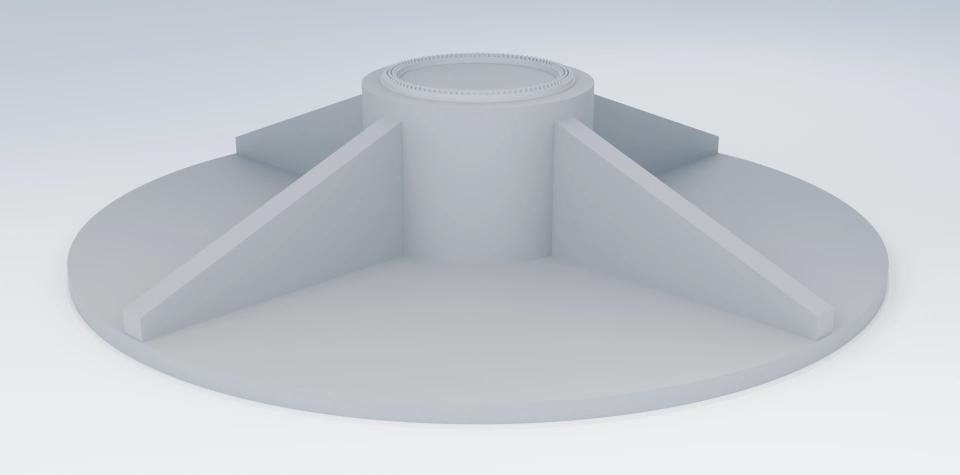
Prototype design of a Standard Foundation
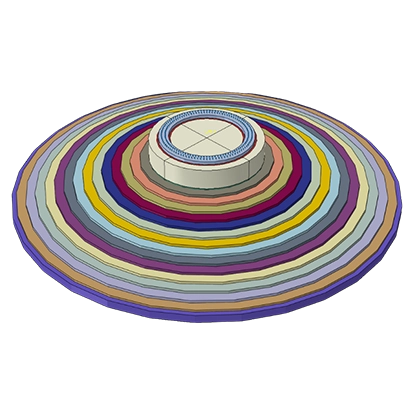
FE analysis of a Standard Foundation
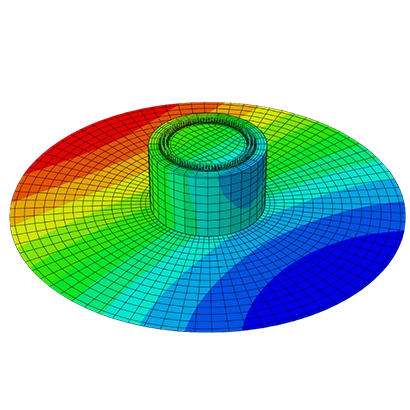
FE analysis of a Standard Foundation
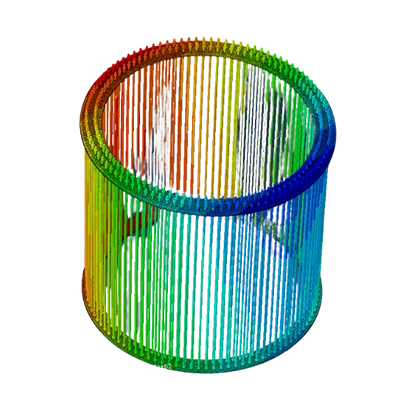
FE analysis of a Standard Foundation
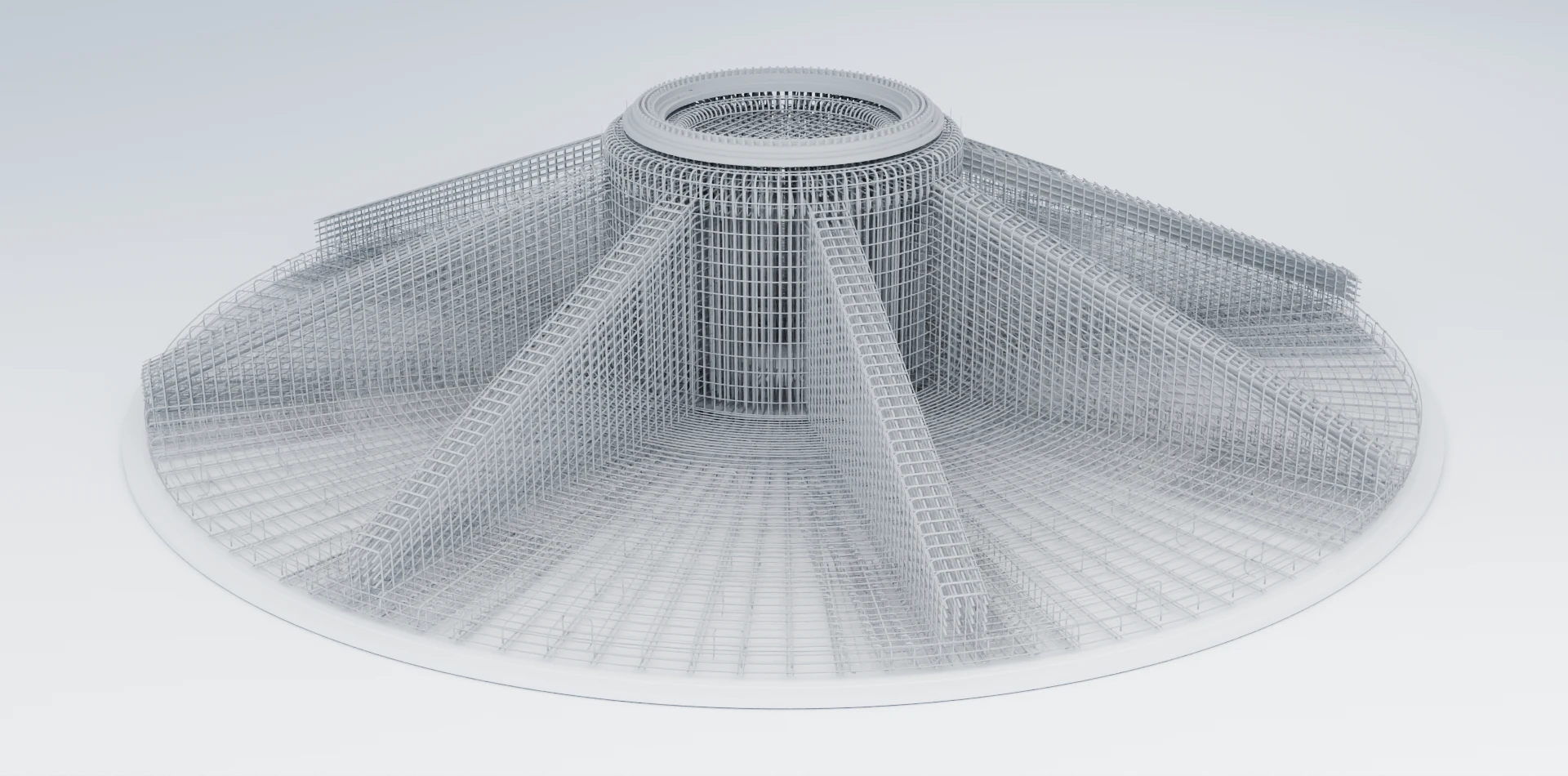
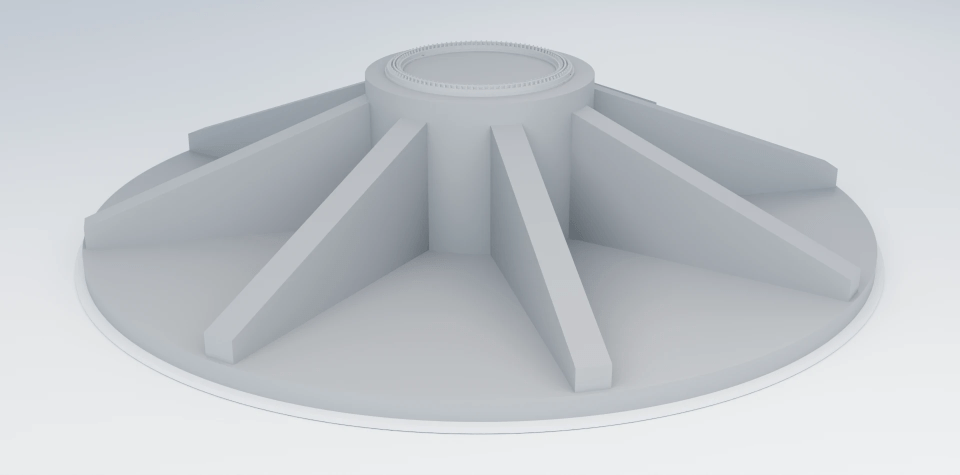
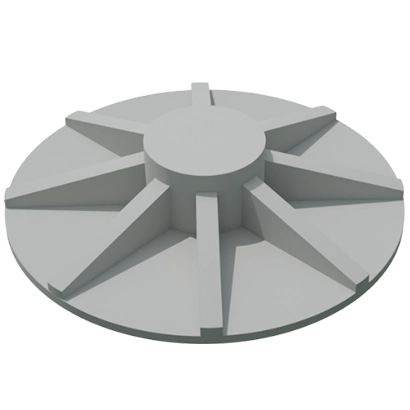
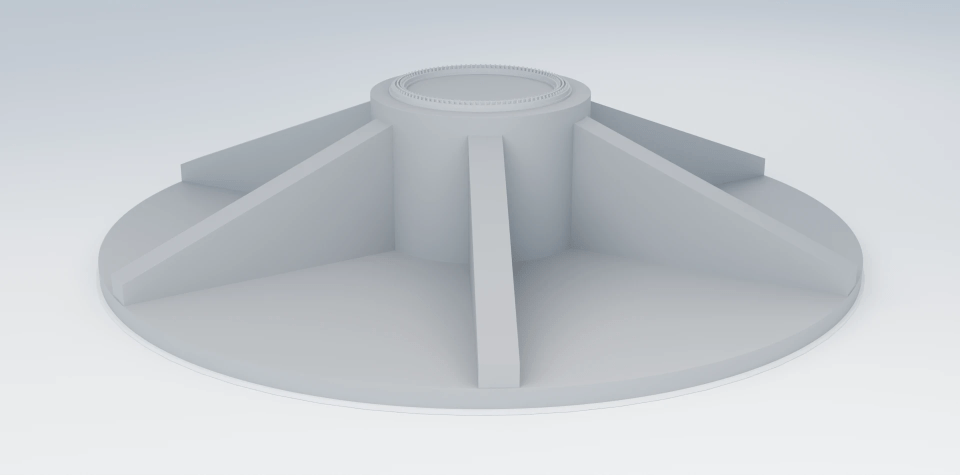
An optimized evolution of the standard type, featuring eight radial walls for improved load dispersion. Engineered to minimize concrete usage and reduce excavation volume. Provides enhanced stiffness and fatigue performance under dynamic turbine loads.
Advantages
- Reduced Excavation
- 150 m³ less concrete used
- 35% reduction in concrete volume
- Approximately 15% cost savings per foundation
- 45 tonnes of CO₂ emissions avoided per foundation
- Complex geometry engineered for peak performance
- Outperforms standard foundations in design & sustainability

Prototype design of a 8-Wall Foundation
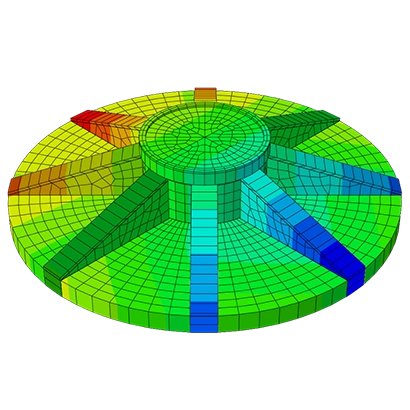
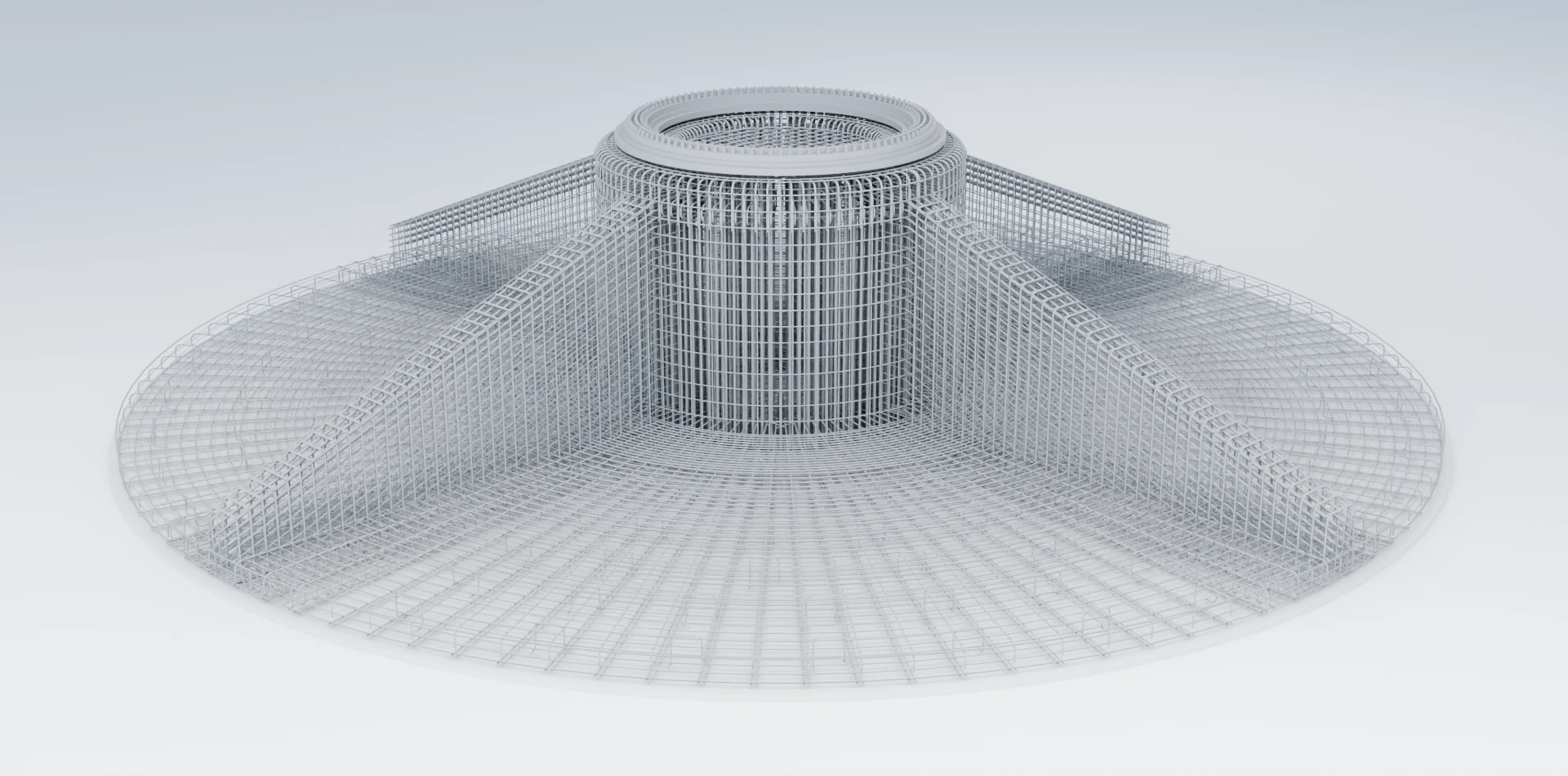
FE analysis of a 8-Wall Foundation
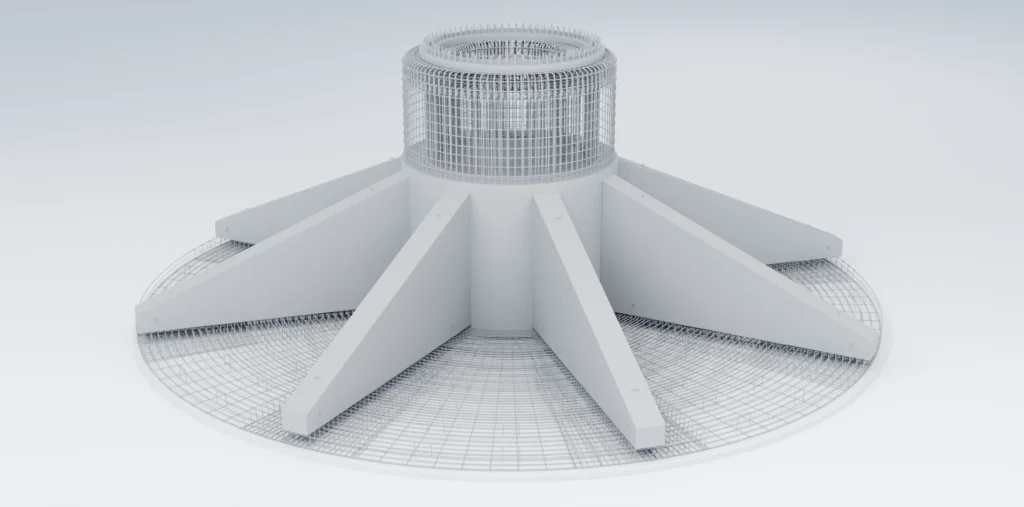
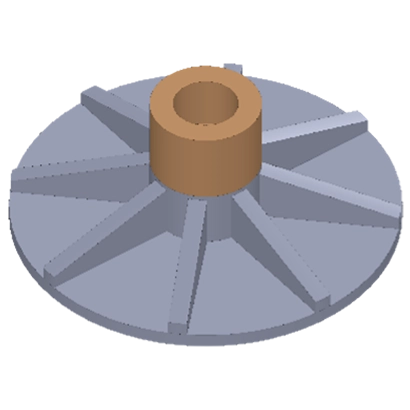
An advanced version of the 8-wall foundation, designed with precast segments for faster and more efficient construction. Factory-cast elements ensure superior quality, precise dimensions, and reduced site work. Ideal for large-scale wind projects requiring quick installation and consistent performance.
Advantages
- Up to 15% cost reduction compared to standard foundations.
- 10% cheaper than cast-in-situ 8-wall foundations.
- 30% reduction in water usage.
- Lesser construction time.
- Better quality control.
- Rapid and mass construction.
Prototype design of a Precast 8-Wall Foundation

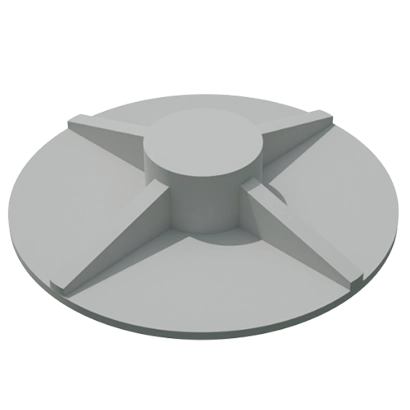
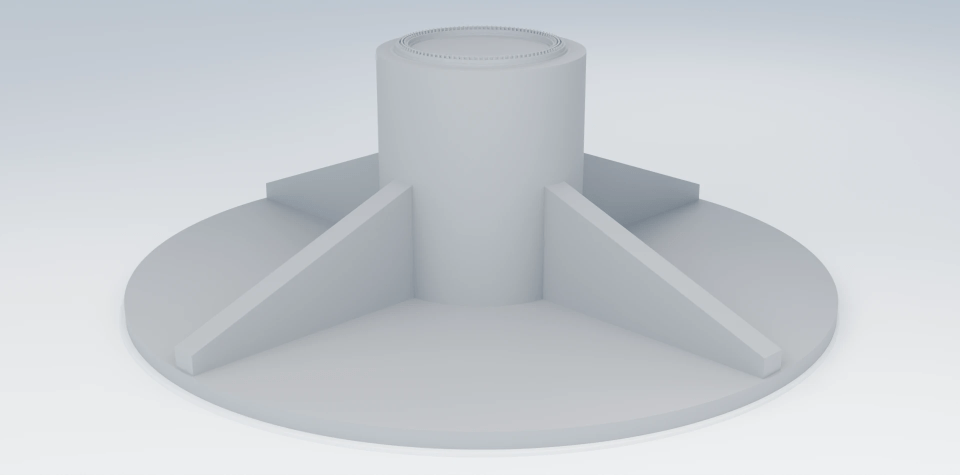
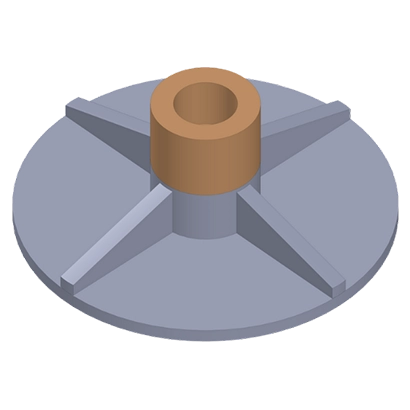
A cost-effective design variant that uses four orthogonal walls for structural balance. Ensures better moment resistance and material efficiency. Designed for medium to high wind load sites requiring compact geometry.
Advantages
- 40% reduction in concrete volume compared to standard type.
- Lesser excavation required.
- Eliminates nuisance of backfilling between walls.

Prototype design of a 4-Wall Foundation
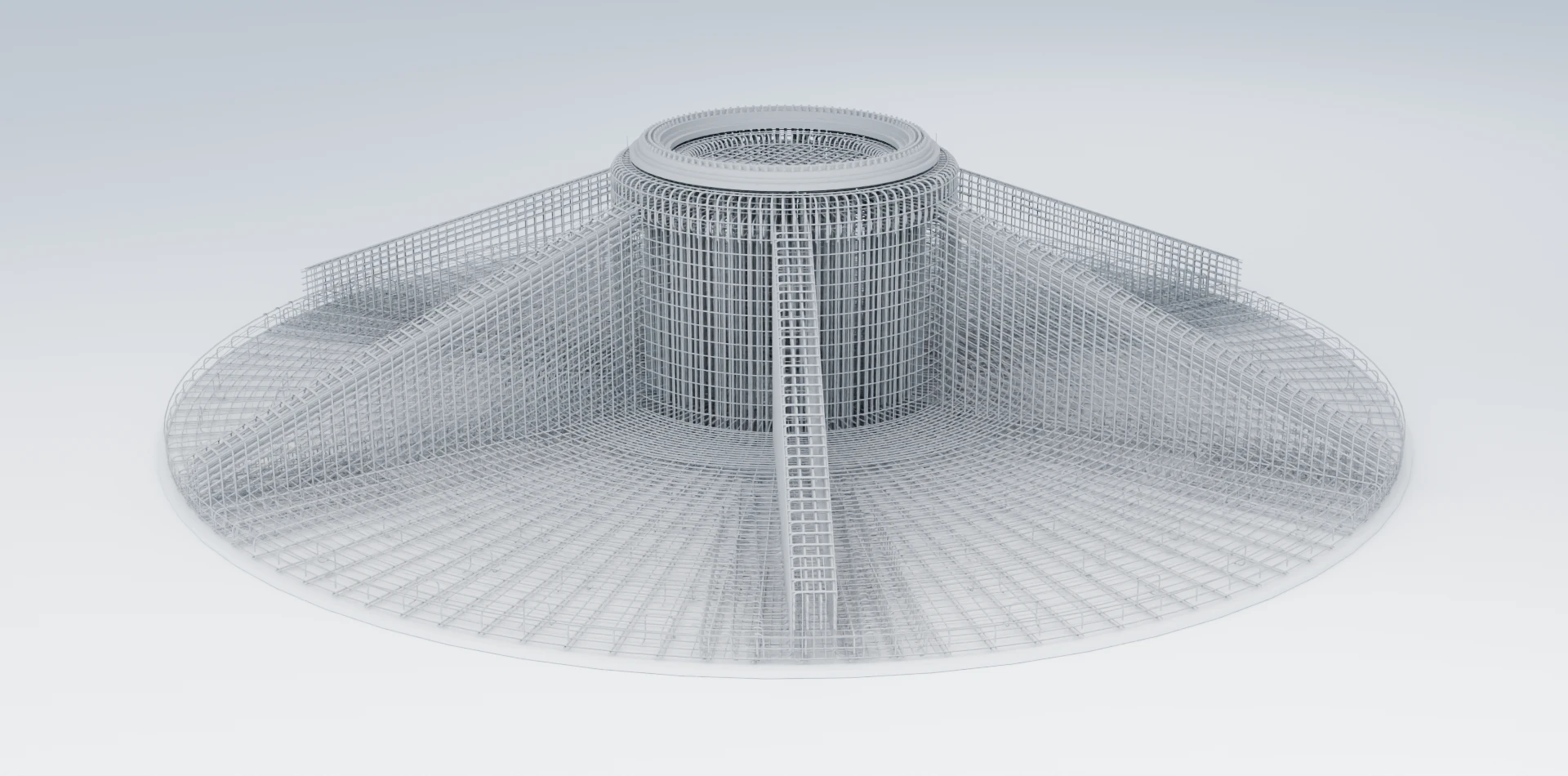
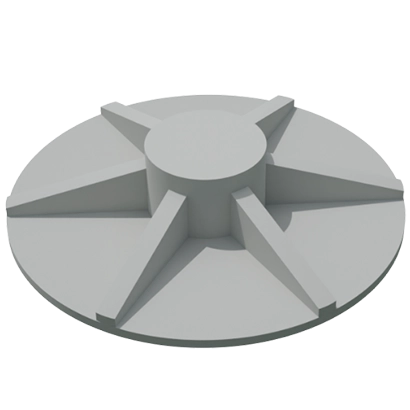
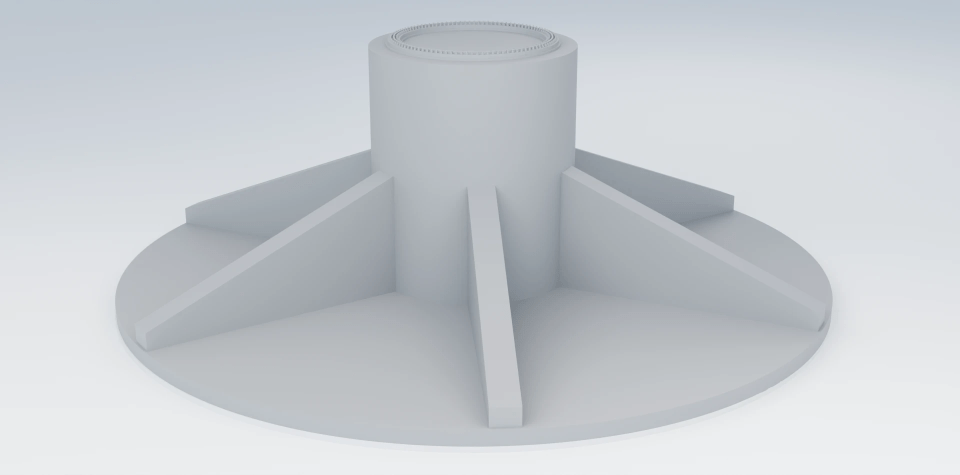
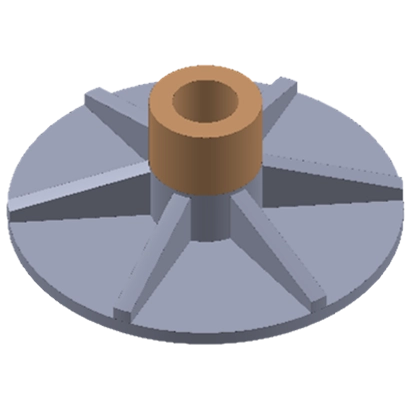
A well-balanced foundation type with six internal walls for uniform stiffness and reduced settlement. Delivers structural optimization while maintaining constructability. Suited for sites with varying soil conditions.
Advantages
- 20% reduction in concrete volume.
- Lesser excavation requirements.
- Enhanced geometry with better load transfer efficiency.

Prototype design of a 6-Wall Foundation
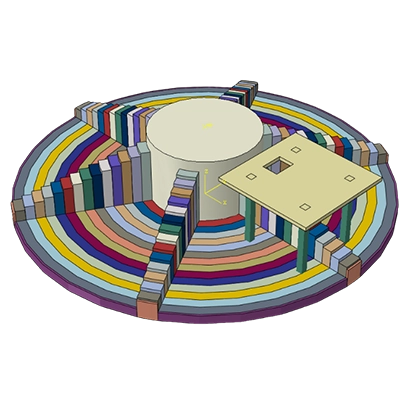
FE analysis of a 6-Wall Foundation
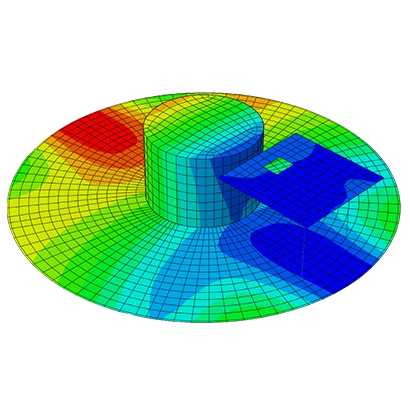
FE analysis of a 6-Wall Foundation
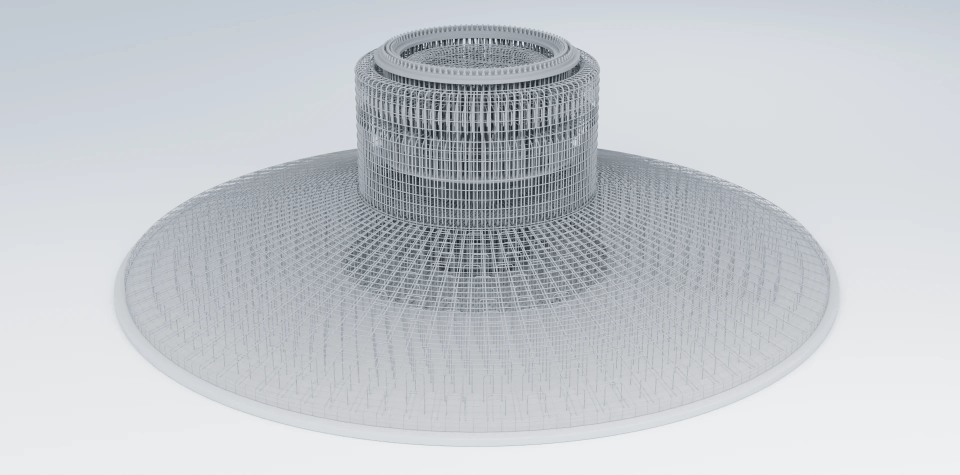
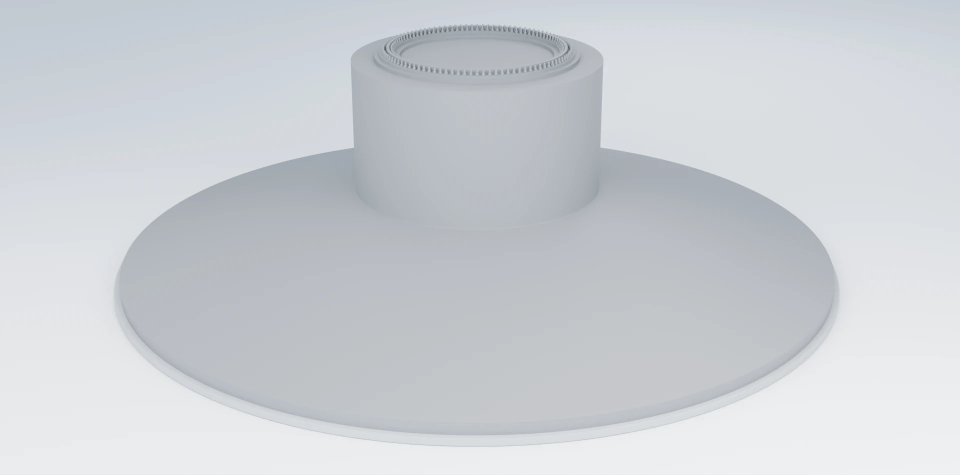
An advanced version of the standard circular design incorporating an elevated pedestal section. Enables replacement of lower tower sections, optimizing logistics and tower costs. Ideal for sites requiring increased hub height without changing turbine components.
Advantages
- Enhances Annual Energy Production (AEP) with constant tower height.
- Reduces tower cost by replacing the bottom section.
- Smaller foundation diameter with improved load transfer.
- Aides in logistics challenges of tower and lesser turn around time (TAT)

Prototype design of a High Rise Standard Foundation
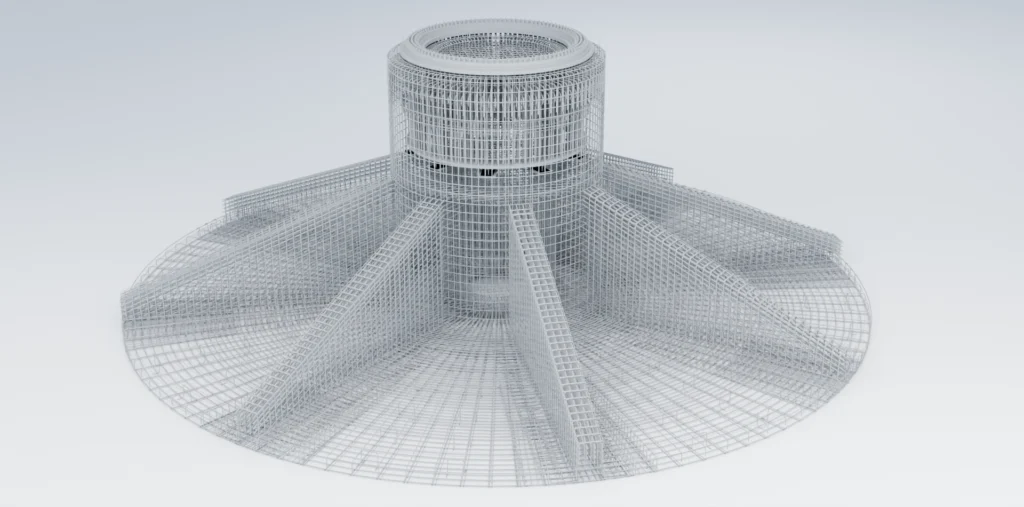
Combines the advantages of wall-based geometry with a raised pedestal for taller hub heights. Optimized for structural rigidity with reduced concrete usage. Engineered to improve AEP while minimizing tower transportation challenges.
Advantages
- Reduced concrete volume and tower cost
- Enhances Annual Energy Production (AEP) with constant tower height.
- Reduces tower cost by replacing the bottom section.
- Smaller foundation diameter with improved load transfer.
- Aides in logistics challenges of tower and lesser turn around time (TAT)

Prototype design of a High-Rise 8-Wall Foundation
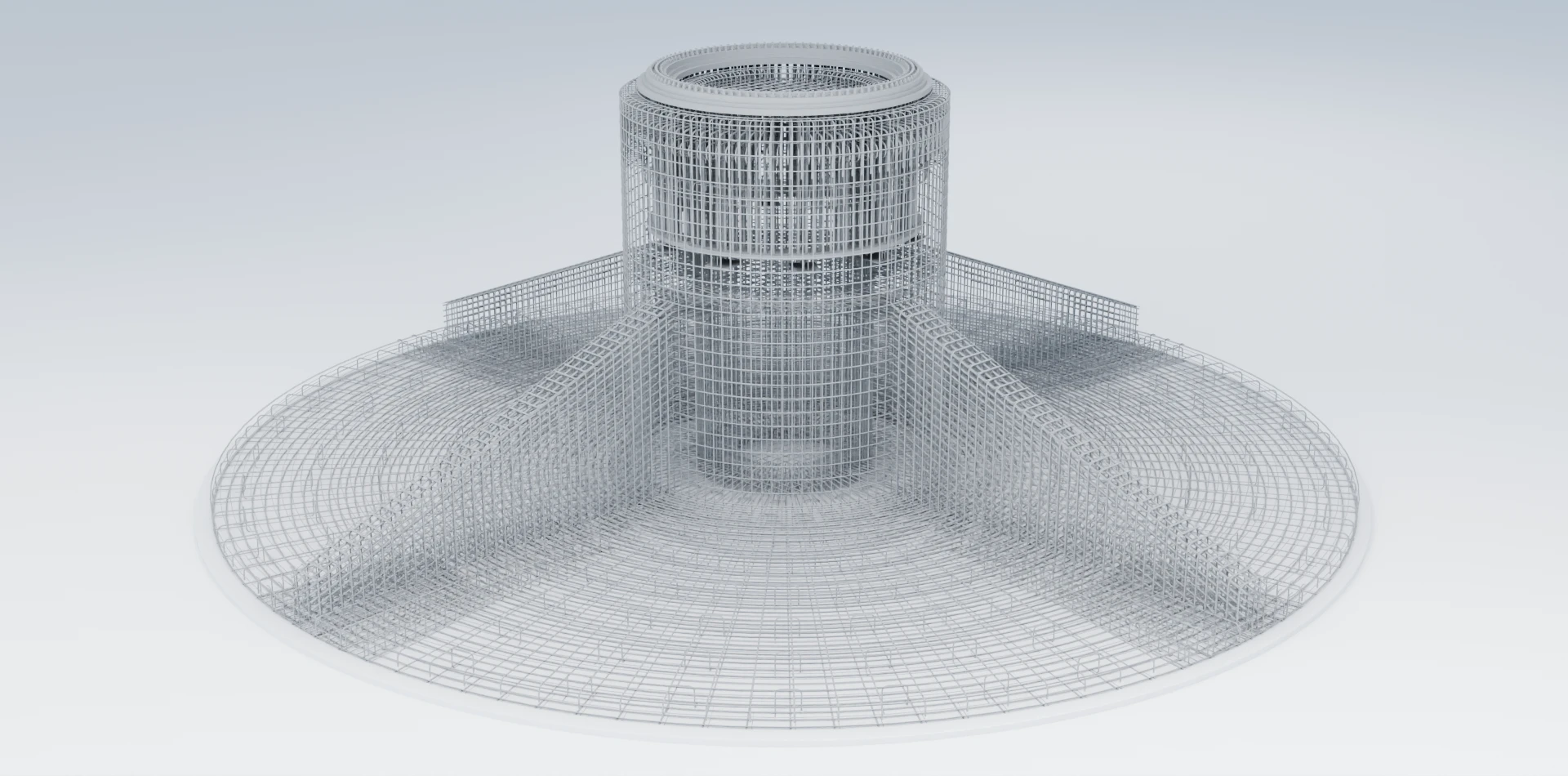
A hybrid form integrating four radial walls and a raised pedestal for cost-effective elevation gain. Improves structural stiffness and reduces base moments. Preferred for mid-size turbines where height optimization is key.
Advantages
- Reduced concrete volume and tower cost.
- Enhances Annual Energy Production (AEP) with constant tower height.
- Reduces tower cost by replacing the bottom section.
- Smaller foundation diameter with improved load transfer.
- Aides in logistics challenges of tower and lesser turn around time (TAT)

Prototype design of a High Rise 4-Wall Foundation
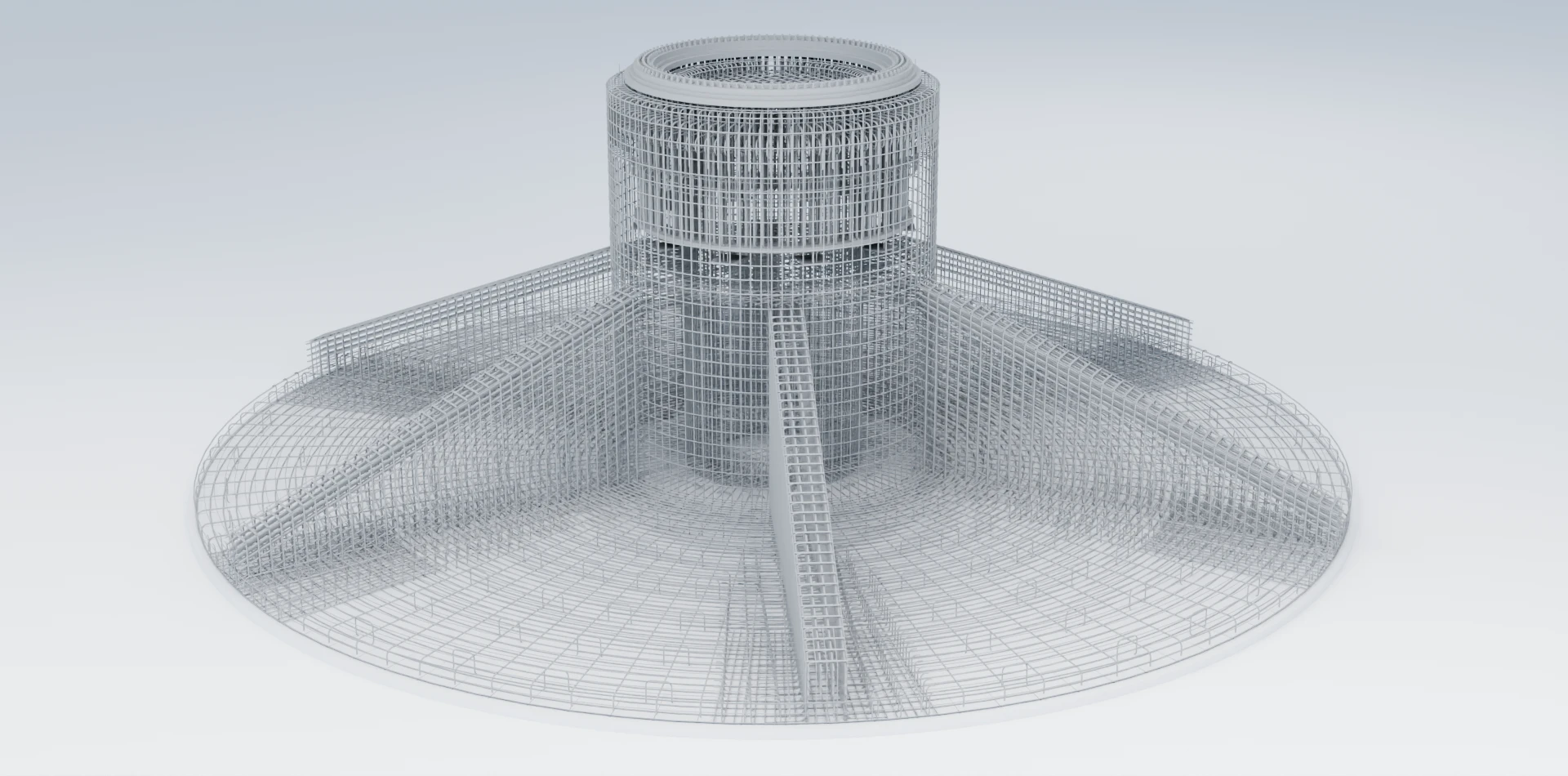
Six-wall configuration combined with elevated center to replace tower bottom sections efficiently. Provides increased lateral stiffness and reduced overturning effects. Designed for large MW-class turbines requiring taller hub heights.
Advantages
- Reduced concrete volume and tower cost.
- Enhances Annual Energy Production (AEP) with constant tower height.
- Reduces tower cost by replacing the bottom section.
- Smaller foundation diameter with improved load transfer.
- Aides in logistics challenges of tower and lesser turn around time (TAT)

Prototype design of a High Rise 6-Wall Foundation
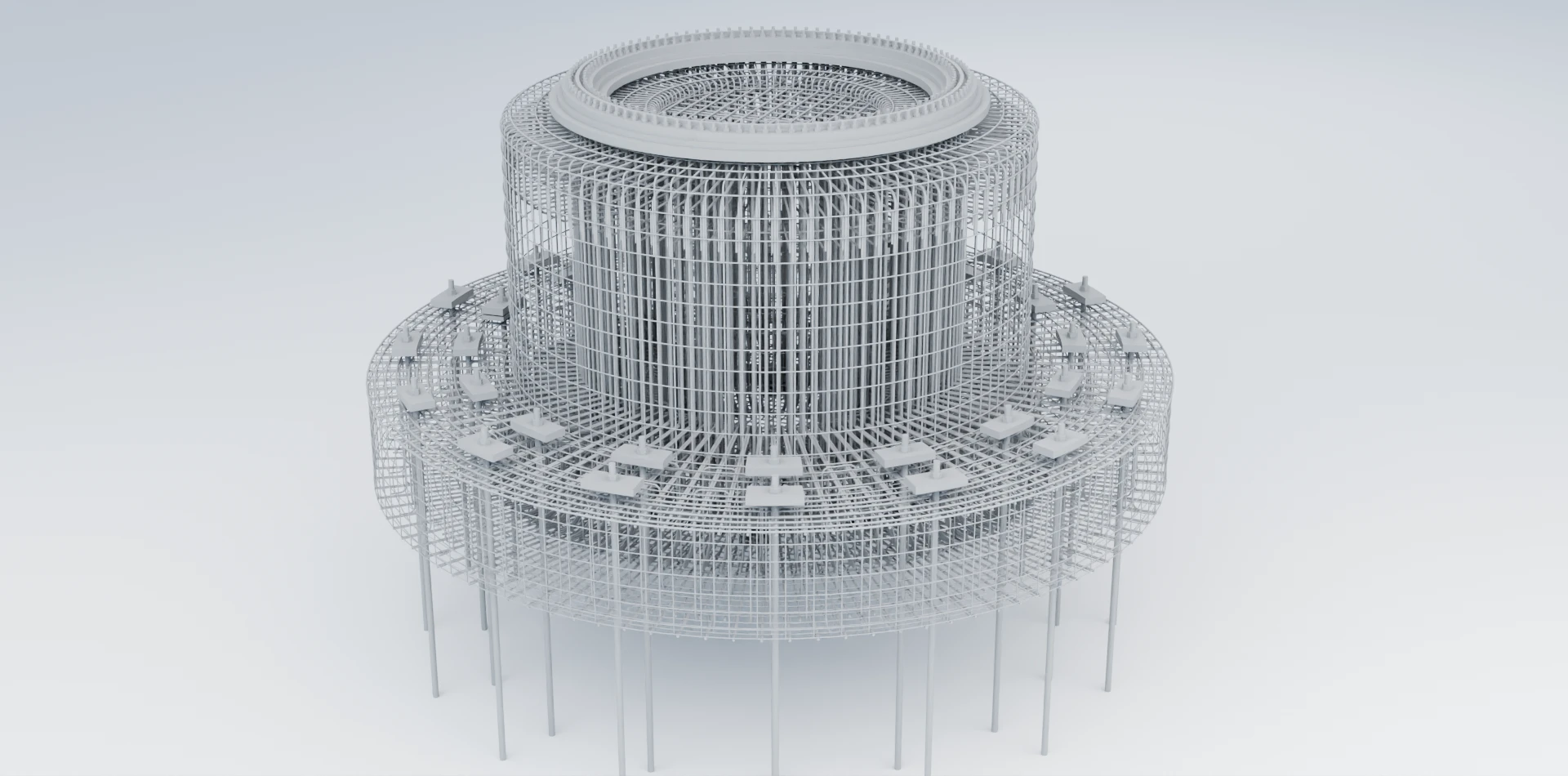
Uses post-tensioned anchors drilled into bedrock for high load-bearing capacity. Minimizes excavation volume and concrete use while ensuring excellent stability. Best suited for hilly or rocky terrains with low overburden soil.
Advantages
- High optimization in concrete and steel usage.
- Reduced construction time.
- No backfilling required.
- Consists of prestressed anchors and it is a robust structure.

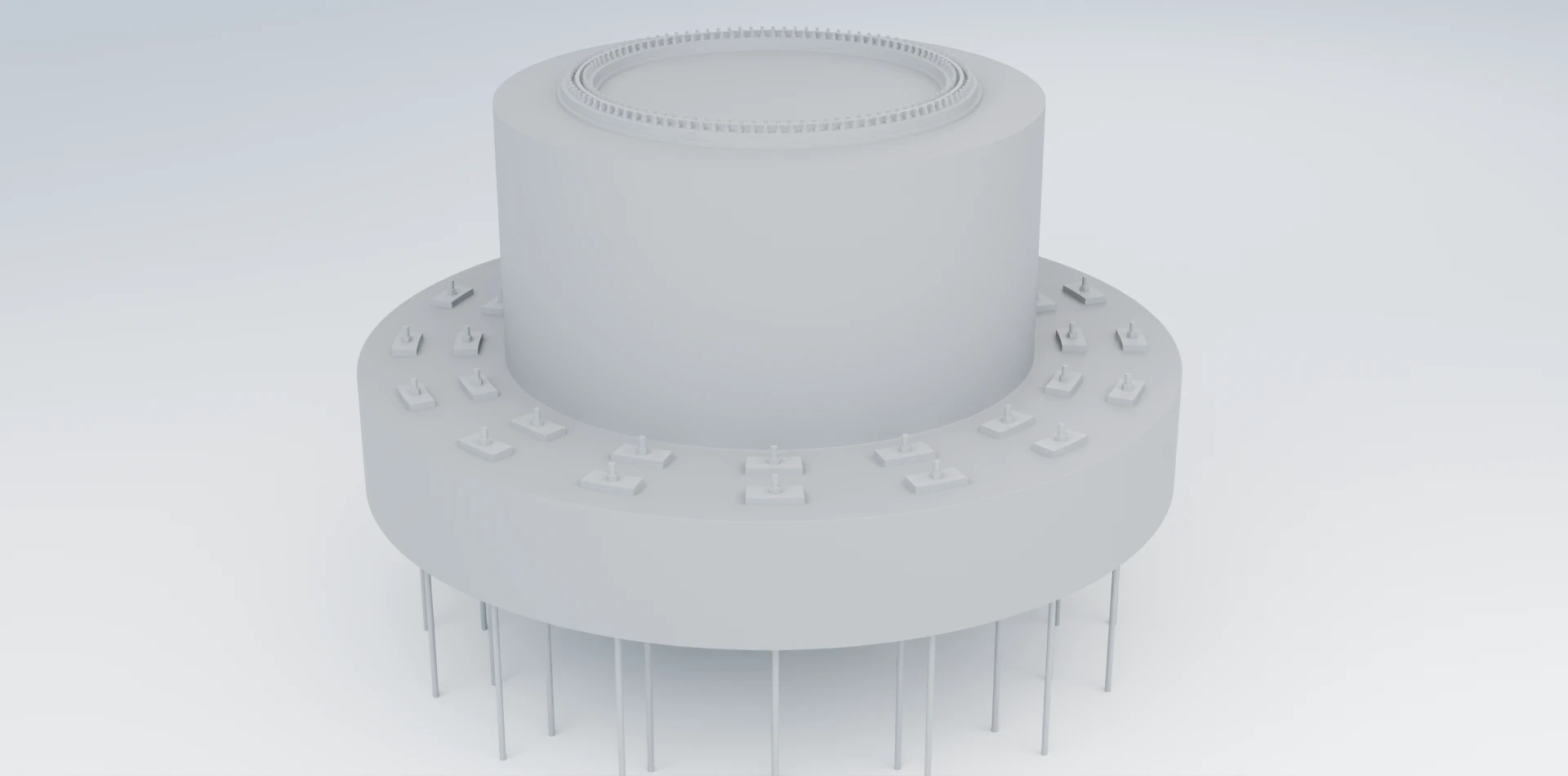
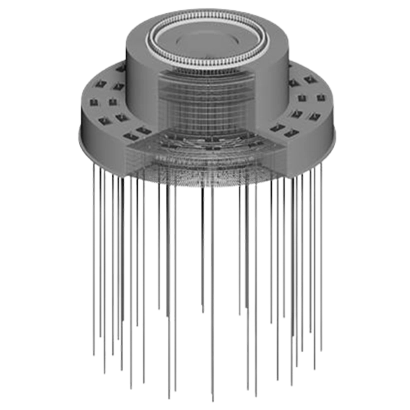
Prototype design of a Rock-Anchor Foundation
An R&D-based hollow-type concept resembling a turtle shell for material efficiency. Combines lightweight design with superior strength and stiffness. Engineered for quick assembly and reduced excavation.
Advantages
- High optimization in concrete and steel quantity.
- Lesser excavation.
- Hollow type foundation.

Prototype design of a Turtle Foundation
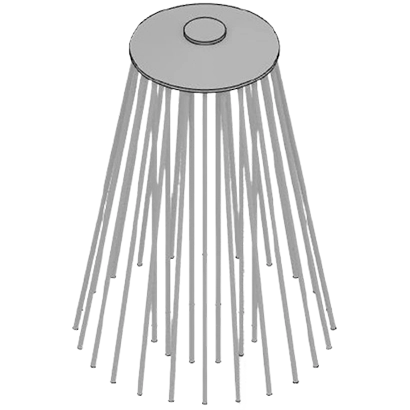
An R&D-based hollow-type concept resembling a turtle shell for material efficiency. Combines lightweight design with superior strength and stiffness. Engineered for quick assembly and reduced excavation.
Advantages
- High optimization in concrete and steel quantity.
- Lesser excavation.
- Hollow type foundation.

Prototype design of a Turtle Foundation
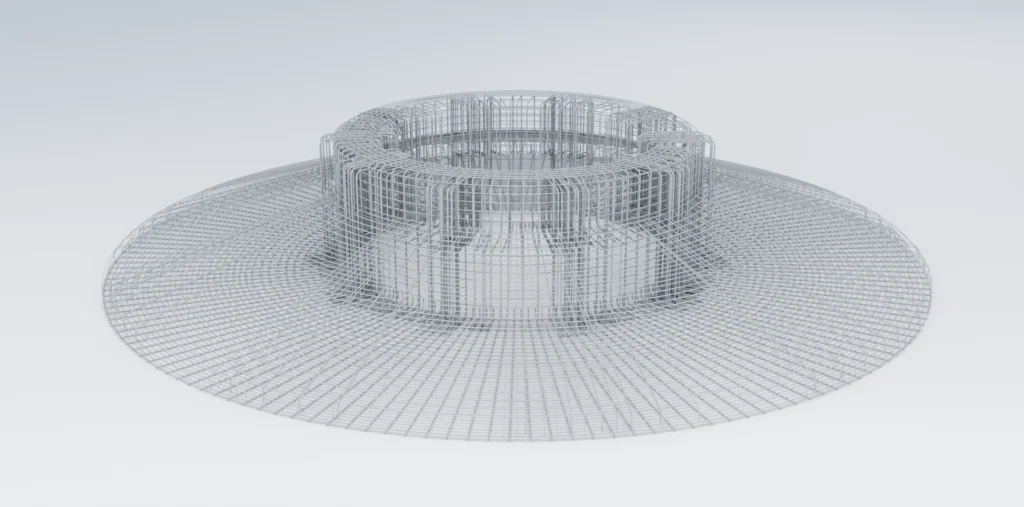
A versatile foundation system combining reinforced concrete with steel support elements, suitable for both onshore and offshore applications. Integrates the benefits of gravity foundations with anchor or pile systems to ensure stability under complex load conditions. Designed to adapt efficiently to varying soil profiles and turbine sizes, ensuring long-term reliability and durability.
Advantages
- Suitable for both onshore and offshore sites.
- Combines reinforced concrete and steel support for enhanced strength.
- Adapts to diverse soil conditions and turbine capacities.
- Mix of gravity and pile/anchor systems for optimal load transfer.
- Ensures long-term performance in challenging environments.